
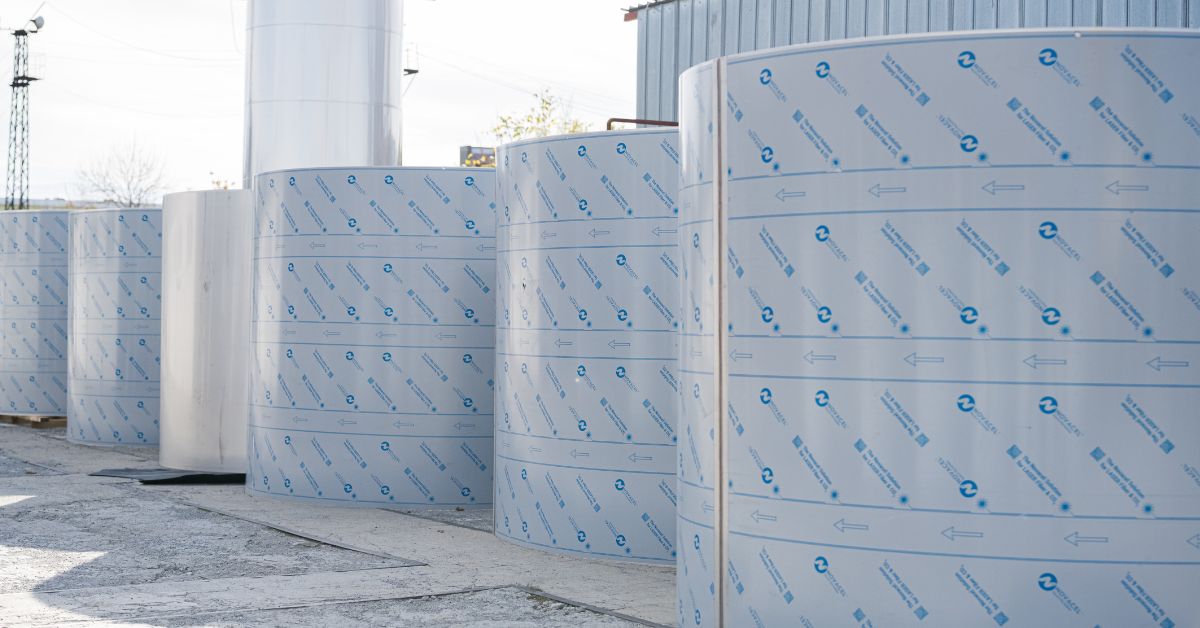
Stainless steel is a key material in the manufacture of vessels for the food industry. It offers good corrosion resistance and is easy to clean.
The term “stainless steel” covers several grades, each with a specific chemical composition and distinct properties. The most common include AISI 304 and AISI 304L, as well as AISI 316 and AISI 316L. AISI 316Ti may be used under particular conditions.
The differences between these grades determine how the material responds to contact with salts or acids. They also affect its behaviour after welding.
Selecting the steel grade is therefore part of the vessel’s engineering design. The decision follows an assessment of the product and operating conditions. The cleaning method and expected service life must also be considered. The aim is to select the material that meets the actual process requirements, rather than simply the most expensive grade.
What are the advantages of stainless steel
Corrosion resistance is one of the main advantages of stainless steel. It results from the chromium in the material. When exposed to oxygen, an extremely thin protective layer of chromium oxide forms on the surface. Known as the passive layer, it limits direct interaction between the metal and its environment.
This layer can reform under suitable conditions, but it does not make the steel immune to every chemical exposure. High temperatures can accelerate corrosion. Chlorides can also disrupt the protective layer locally. Risk increases when deposits remain on the surface or product is retained in areas that are difficult to access.
With a properly selected grade, a vessel can provide a long service life even under intensive use. Product contact surfaces do not require an additional protective coating, eliminating the risk of such a coating cracking or separating during operation.
Austenitic stainless steels, including AISI 304, AISI 304L, AISI 306 and AISI 306L, allow vessels to be manufactured in various configurations. The shell can be fitted with a heating jacket or an internal coil. An appropriate agitator can be installed according to the process.
AISI 304 and AISI 304L: Similar grades with an important difference
AISI 304, designated EN 1.4301 under the European system, is one of the most widely used stainless steels. It offers a good balance of corrosion resistance and workability. It is used for equipment handling water and a range of food products. It is suitable for environments without high chloride concentrations or highly aggressive chemicals.
AISI 304L, or EN 1.4307, has a similar composition and performance. The main difference is its lower carbon content. The “L” stands for “low carbon”, an important distinction in the manufacture of welded structures.
During welding, the material surrounding the weld is heated to a high temperature. Under certain conditions, carbon can combine with some of the chromium to form chromium carbides along grain boundaries. Less free chromium then remains in the adjacent areas, potentially reducing their local corrosion resistance.
The lower carbon content of 304L limits this risk. It does not necessarily make the welding operation itself easier. Its advantage is better retention of corrosion resistance in the heat-affected zone around the weld. For this reason, 304L is often preferred for process vessels with numerous welded joints.
AISI 304 remains suitable for many applications. With thinner components and controlled welding procedures, it can fully meet the specified requirements. The choice between 304 and 304L depends on the vessel design and manufacturing method, as well as the product and operating conditions.
AISI 316 or 316L: A choice for more demanding corrosive conditions
AISI 316, designated EN 1.4401 under the European system, is a stainless steel containing molybdenum. Molybdenum improves resistance to localised forms of corrosion in many chloride-containing environments. This is the main reason to consider 316 for salty products or more aggressive cleaning regimes.
AISI 316L, or EN 1.4404, is the lower-carbon variant. The distinction follows the same principle as that between 304 and 304L.
316L is widely used in reactors and fermenters. It is also found in bioreactors and vacuum homogenising systems. These are complex installations with numerous welded joints and demanding requirements for product contact surfaces.
It is often assumed that 316 or 316L can solve any corrosion problem. This is not the case. They offer better resistance than 304 and 304L in many environments, but they are not resistant to every chloride concentration. Nor are they suitable for all acids at any temperature.
An assessment must consider the product’s full composition and how long it remains in the vessel. Heating often increases corrosive action. Deposits may create local areas of higher concentration even when the average concentration throughout the vessel appears acceptable.
AISI 316Ti: When titanium stabilisation matters
AISI 316Ti, or EN 1.4571, is a titanium-stabilised grade of 316. Titanium binds with carbon and limits the formation of chromium carbides. This helps the material retain resistance to intergranular corrosion during prolonged exposure to elevated temperatures.
This grade is considered for specialised applications where the temperature regime justifies its use.
The choice depends on the operating temperature and duration of exposure. The welding method and required surface finish must also be considered. Titanium content is therefore a response to specific operating conditions, not a universal advantage.
What information is needed to make the right choice
The first step is to establish which product will be stored or processed and to obtain information about its chemical composition. If the vessel will handle more than one product, each must be assessed.
The pH value matters, but it does not provide a complete answer on its own. Two liquids with the same pH may affect steel differently because they contain different chemicals. The types of acids present and whether the product contains salts must therefore be checked.
The entire process cycle must also be analysed. Evaporation concentrates the product and can make it more aggressive towards the material. Heating increases the rate of chemical reactions. The material therefore cannot be selected solely on the basis of the raw material’s condition at the start of the process.
Chlorides require particular attention because they can disrupt the passive layer. Small spots on the surface may be the first visible sign, while deeper damage develops beneath them. High temperature and stagnant conditions increase the risk. These factors must be considered for salt dissolving tanks and brine vessels.
Operating pressure is also part of the design specification, although it does not directly determine a grade’s corrosion resistance. It affects wall thickness and head geometry. For vacuum service, the shell must be checked for resistance to buckling. Material selection is thus linked to the structural design calculations for the entire vessel.
Cleaning is another essential consideration. The cleaning agent may be more aggressive than the product, particularly at high temperatures. Its concentration and the duration of the cleaning cycle must be known. Where a centralised clean-in-place (CIP) system is used, compatibility must be checked for both the vessel and its connected pipework.
Applications of stainless steel vessels across industries
In the food industry, process vessels are used to store and process products. Stabil Engineering Alpha designs and manufactures liquid storage tanks with capacities from 50 litres to 90 m³. They can be installed indoors or outdoors. Their additional equipment is specified according to their role in production.
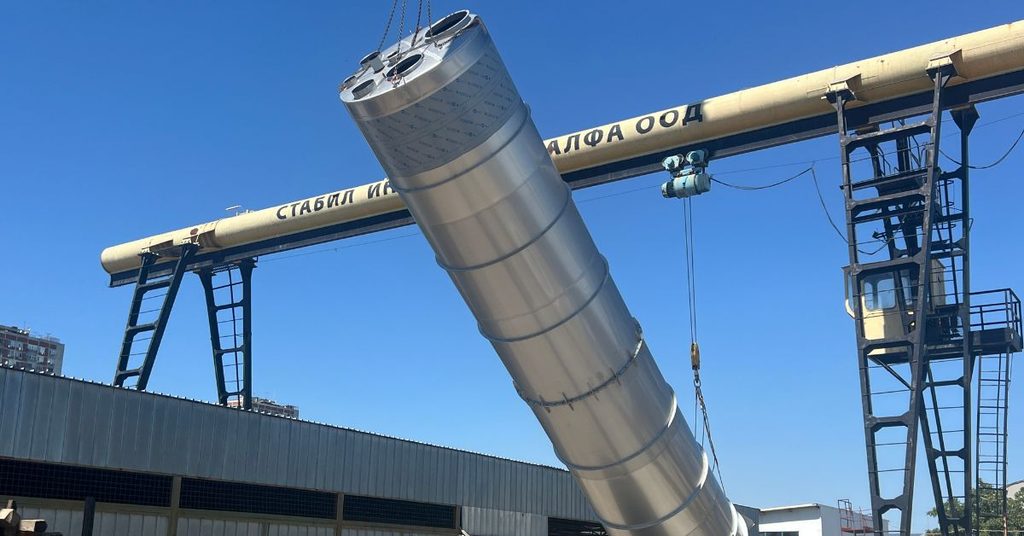
A batch pasteuriser illustrates why material and design must be considered together. It has a vertical cylindrical shell and a conical or sloped bottom. A spiral water jacket allows the product to be heated and then cooled. Such pasteurisers are used for milk and fruit juices.
For chocolate vessels, the main task is to heat the product evenly and keep it homogeneous. Fat melters handle materials that change physical state during processing. Equipment for honey must account for the product’s high viscosity. Temperature is controlled to achieve the required process behaviour.
Pharmaceutical and biotechnology production places stringent requirements on the cleanliness of product contact surfaces. Stabil Engineering Alpha manufactures bioreactors and fermenters for processes conducted in controlled environments.
In the cosmetics industry, vacuum homogenising systems are used to mix and emulsify products of varying viscosity. The steel grade is selected after assessing the product composition and cleaning regime. Chemical industry reactors are likewise designed for the specific process environment, since no single standard material suits every chemical process.
In agricultural liquid fertiliser production, the salts used and the acidity of the mixture must be known. Deposits on the bottom can create a more aggressive local environment. Proper agitation and the ability to drain the vessel completely are therefore important.
The engineering approach of Stabilengineering – Alfa
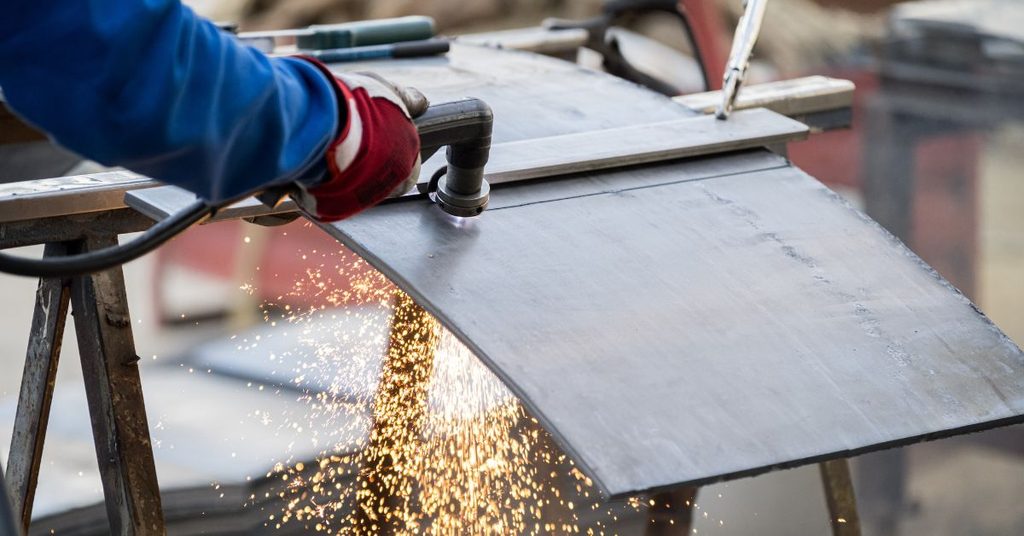
Work on a process vessel begins with defining the process. We assess the product and how its properties change during operation. We establish the temperature and pressure requirements, along with the need for heat transfer and the cleaning method.
We then select the appropriate stainless steel grade and develop the design. We calculate the capacity and wall thickness, and determine the bottom geometry and any required reinforcement. Where necessary, we design a heating jacket or a connection to an external heat exchanger.
Agitators or pumps can be integrated into the vessel, along with suitable valves and measuring instruments. When the vessel forms part of an existing installation, we account for the available pipework and the sequence of operations.
This approach is supported by an established quality management system. Stabilengineering – Alfa holds ISO 9001 certification. The standard concerns how processes within the company are managed and traced.
We also hold ISO 3834-2 certification, which sets comprehensive quality requirements for the fusion welding of metallic materials. Certification requires the use of approved procedures and qualified personnel.
When the material is combined with the right design and controlled manufacture, the vessel can be reliably integrated into production. This is what turns stainless steel sheet into a practical engineering solution.